
 Found on TxT Charlie
 Found on Ferraris Online40 photos
1964 Chevrolet Cheetah
Engine Type
Price on requestListed 2 days ago
Location
Costa Mesa, CA
Body style
Body Builder
Specifications
- Year
- 1964
- Make / Model
- Chevrolet Cheetah
- Engine
- Engine Type
- Interior color
- Misc
- Seller type
- Dealer
Description
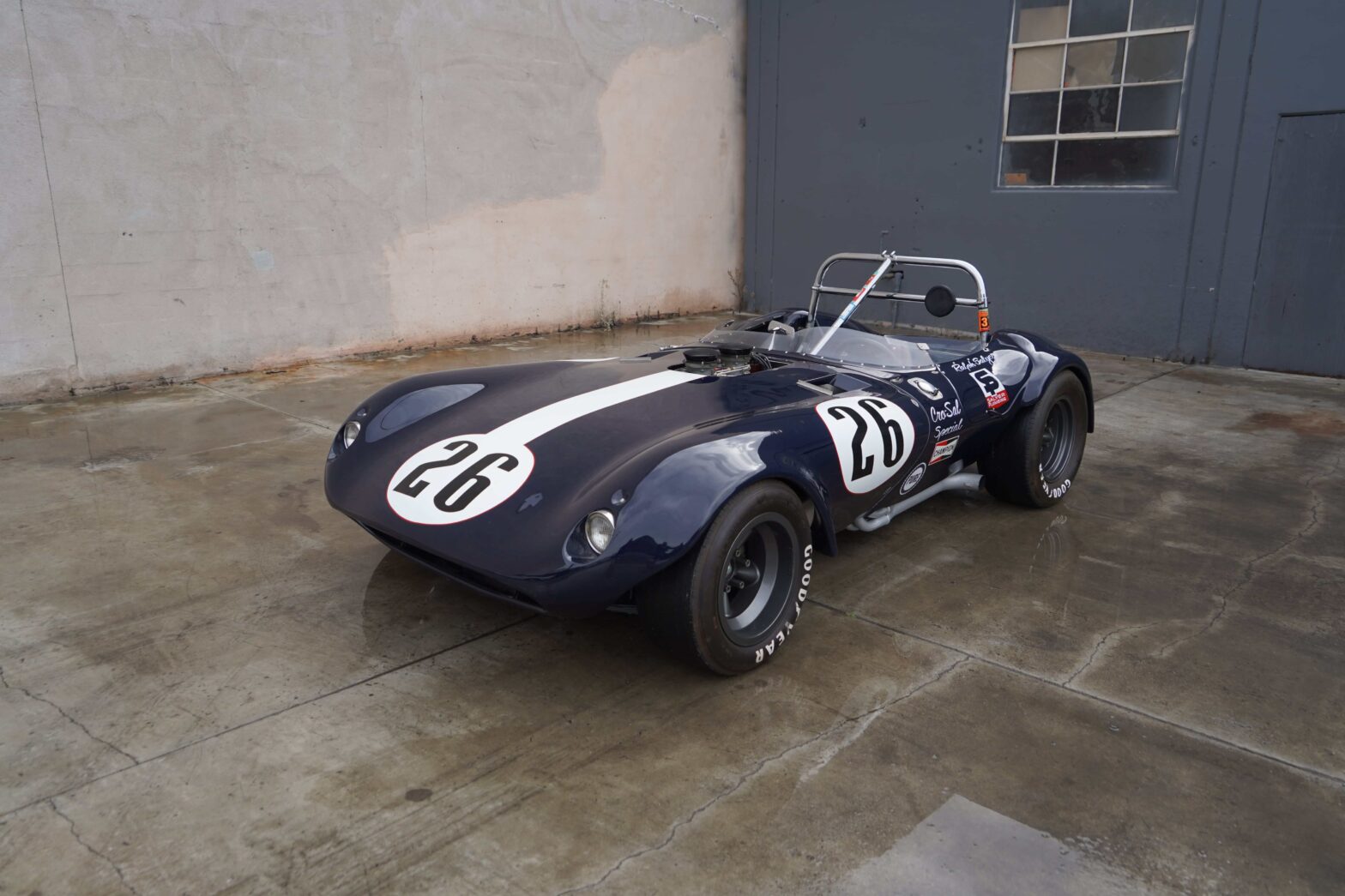
description General Information THIS CAR IS AT AUCTIONCLICK HERE FOR AUCTIONWe are pleased to offer the Cro Sal Special Cheetah, a weapons-grade one-off-one Cheetah roadster with a well documented race history, including eight race wins in 1964 and eleven wins in total, backed up with unparalleled period documentation. Initially conceived as a direct competitor to the Shelby Cobra, the Cheetah was designed and developed by Bill Thomas and Don Edmunds. Though only a two-year venture, from mid-1963 to late 1965, their small shop in Anaheim CA, managed to build these potent race cars into legendary competitors. Needless to say a great deal of the success behind the Cheetah was in the fuel-injected Chevrolet small block, situated far back into the mid-section of the car, creating a near perfect 50/50 weight balance. The astonishing power to weight ratio and fantastic cornering capability, thanks to lots of rubber on the ground, made the Cheetah agile and scathingly fast. All Cheetahs started life as coupes, fitted with a menacing body design featuring its lurid fenders, high-arched rear haunch roof line, and dramatic gullwing doors that left onlookers gaping in awe at the sight of a Cheetah, on or off the racetrack. Only the Cro Sal special (named for mechanic Gene Crowe and original owner/driver Ralph Salyer) became and raced topless in period!Thomas and Edmunds were no strangers to racing and served as a low-key, de-facto, skunk works for Chevrolet’s modest Corvette Road Racing program and the short-lived Corvair Performance program. When Bill Thomas saw an opportunity to build an all-new race winner, it was natural that the high-revving Corvette 327 V8 engine and durable Muncie close-ratio 4-speed transmission would power the Cheetah. But nearly as quickly as the first cars were built, homologation rules changed and GM pulled the plug, leaving the team stranded with no backing. Despite losing funding and a tragic fire on 09 Sept., 1965 at the shop where Cheetahs were built, the company briefly soldiered on, even allowing for fiberglass body shells to be independently built by Fiberglass Trends, offering it in kit form from late 1965 well into the 1980s. During construction of the original Cheetahs, Thomas and Edmunds had done a masterful job building the chassis, utilizing upper and lower tubular A-arms, rear trailing arm suspension, coil over shocks and, as it was 1963 and GM had not yet developed a production disc brake, 1963 Corvette Z06 drum brakes were originally fitted at all four corners. The total package, including the handmade fiberglass body, weighed in at just over 1,500 lbs. This, combined with race-tuning, a “hot” cam, a 3/4 inch stroker crank giving 377 cubic inches and a Bill Thomas modified dual air meter Rochester Fuel Injection made for 470 hp in period, with Goodyear Blue Streak Sports Car Special racing tires mounted on 9 x 15 front and 10 x 15 rear American Racing Magnesium wheels putting the power to the ground, making the Cheetah a formidable competitor at any track.Even though the Cheetah was quick, it couldn’t outpace the speed of racing technology and the shift to mid-engine production. Eventually Thomas and Edmunds moved on to other ventures. Of the ten first generation factory-built Cheetahs, assembled as complete cars, historians generally agree that the first two originally had alloy bodies while the third Cheetah built, and the first to be fiberglass bodied from the start, was sold to Ralph Salyer of Hammond, Indiana initially using race # 25, in very early 1964 and was turned into a roadster mid-season. As one of the first cars built the Cro Sal Special was one of two Cheetahs (# 3 and # 4) entered on 16 February 1964, on race # 25, in the Daytona Continental race at the Daytona Speedway, where the Cro Sal Special Cheetah was clocked at a stunning 200 + mph on the banking, which literally blew the doors off the car, forcing Ralph Salyer, the fearless driver, to duct tape the doors in place for all future races. The next major race was the June Sprints at Elkhart Lake’s Road America in 1964 where the Cro Sal Special, then using race # 26, won it’s 40 lap race for C Modified cars and was clocked at 183 mph on the back straight! Some had doubts about the top speed so Salyer came back for the June Sprints in 1965 and clocked an almost identical top speed, again winning the race! A combination of overwhelming cockpit heat and the fear of being trapped inside a burning car with the doors duct taped shut brought out the sawzall, and so on 02 August 1964 the Cro Sol Special first appeared topless at the Wisconsin GP at Lynndale Farms, finishing first. Later that year on 15 Nov., the Cro Sal Special ran at the American Road Race of Champions at Riverside, using race # 32, finishing 3rd and clocking an astounding 198 mph on Riversides long back straight, all documented by race reports in magazines of that time period!Ford versus ChevroletAs anyone who has watched the Ford Versus Ferrari movie know, Henry Ford II wanted to win at every level, funding the Ford Cosworth V8 for the F1 series and supplying engines, transmissions and ever more generous funding to Holman-Moody for NASCAR and Carroll Shelby for the US USRRC race series. Cobra production began in 1962 at Dean Moons shop in Santa Fe Springs, only twenty miles from the Bill Thomas operation in Anaheim. By April of 1963 Shelby had built the needed 100 cars for production homolgation and was capable of building another 15 cars a week. With 289 cubic inches putting out up to 330 hp in race trim and weighing in at 2,300 lbs the Cobra absolutely dominated the US USRRC race series, sponsored by the SCCA. Frederic Donner, then the CEO of General Motors, did not share Henry Ford’s enthusiasm for racing and had instead put a corporate ban on racing involvement! With only ten cars built in period, and no hope of reaching the needed 100 cars for homologation, the Cheetahs were forced to race as a C Modified and were soon
Location
Costa Mesa, CA · approximate area
Similar vehicles
More CheetahsFound on TxT Charlie Found on Park Place LTD - Bellevue
2015 Chevrolet Corvette
43,563 mi · Bellevue, WA

