
 Found on Japanese Classics40 photos
2001 Honda Capa
D15B · 4-speed automatic
Price on requestListed 1 day ago
Mileage
81,000 mi
Location
Richmond, VA
Transmission
4-speed automatic
Specifications
- Year
- 2001
- Make / Model
- Honda Capa
- Engine
- D15B
- Seller type
- Dealer
Description
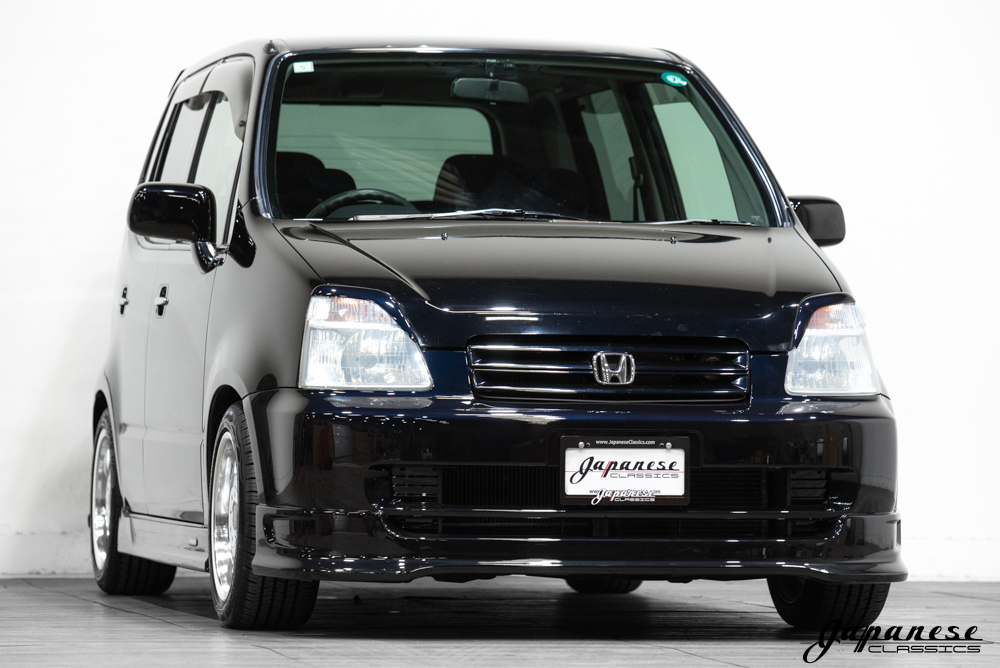
Stock #7186 Bridging the gap between a kei car and a full-sized hatchback, the Honda Capa is the greatest subcompact we never received from the brand. It shares its running gear with similar Civic models offered here in the States, and in many ways feels like the predecessor to the Fit. Exterior Overview Bridging the gap between a kei car and a full-sized hatchback, the Honda Capa is the greatest subcompact we never received from the brand. It shares its running gear with similar Civic models offered here in the States, and in many ways feels like the predecessor to the Fit. In our opinion, it’s significantly more stylish, and this Nighthawk Blue Pearl (B92-P) example is set off by an OEM optional Modulo lip kit, clear tail lamps, a factory rear spoiler, FRP eyelids, and stylish 15″ SSR Vienna Courage alloys. Save for a few dings and chips, this compact cruiser shows well, and the undercarriage condition and 81k verified and documented miles on the clock are worth writing home about. Ideal as a capable city commuter, cutesy canyon carver, or Cars&Coffee champ, this Capa is a Japanese Classic, and a forgotten model from Honda’s golden age! Interior Overview Designed to compete with the Nissan Cube and Toyota bB, the Capa’s interior follows the same ethos. It offers up loads of vertical space, versatile seating arrangements, and plenty of power switchgear on hand to assist daily driving. The seats are upholstered in a durable patterned cloth, and the fabric has resisted major wear and tear over the years. The same can be said for the condition of the dash plastics, headliner, and carpets, and there’s little to scrutinize overall, save for some scuffs on the door cards. The driver can settle in behind a tilt-adjustable steering column, and both forward occupants benefit from dual SRS airbags. The center stack is easy to navigate and is utilitarian in design. This makes accessing the climate control panel simple, and cold A/C and hot heat can be funneled throughout the cabin. Adjacent to the HVAC, Pioneer audio is on hand and sounds decent for its age. Even a nifty backup camera was installed in Japan. Power windows, locks, and electronic folding mirrors assist daily use, and work well in true Honda fashion. For your rear occupants, the seats recline, fold flat, and also slide to and fro. It’s clear Honda designed this Capa to stand the test of time, and we have no burning critiques about this cabin’s condition. Clearly, it was well cared for in a prior life! Mechanical Overview The D15B engine was a real workhorse in US Honda models, and it feels even more exciting under the hood of this Capa. Fresh off a recent service, the 1.5l cranks over with haste, care of a new 12v battery, and benefits from a fresh oil and filter service, a new engine air filter, and all-new spark plugs. To keep all its lubricant internal, we installed a new distributor O-ring and a new valve cover gasket for good measure. A new rear lower engine mount keeps vibrations to a minimum, and with the maintenance performed, this four-banger is ripe and ready to tackle daily duty. Power is sent to a 4 speed automatic gearbox, which throws this power to the front wheels of this featherweight ferry. It’s plenty agile, as you’d expect, and easy to park in the city or trudge down the interstate. The suspension is comfortable, and aftermarket lowering springs eliminate unwanted wheel gap. The power steering system is light, as you’d expect, and a fluid flush was performed so it stays that way. The brakes are responsive, and the SSR alloys are wrapped in all-new rubber. This unique Honda runs like a top, looks sharp, and honestly, it’s one of the coolest new Japanese Classics we’ve come across! *California Residents: In order to register a Grey Market vehicle in the state of California then it will have to be made CARB compliant first. CARB certifications will have to be performed within the state. Depending on the vehicle and any existing modifications will affect the pricing. Typically CARB compliance will range between 5-10K. Additional information can be found on the California Air Resources Board website.
Location
Richmond, VA · approximate area
